
- Services
Company Services
- Mobile
AppDevelopment - Web
Development - Ecommerce
Solutions - AI,
ML&Automation - Cloud
Technologies - Blockchain
Development - Salesforce
Solutions - Game
Development
Don't Hesitate to Collaborate with Us
Contact usAlways Here to Support You
Let's Talk Let's Talk







- Mobile
Working Hours : Monday - Friday, 09.30am - 09.30pm

Posted Date
March 25, 2025
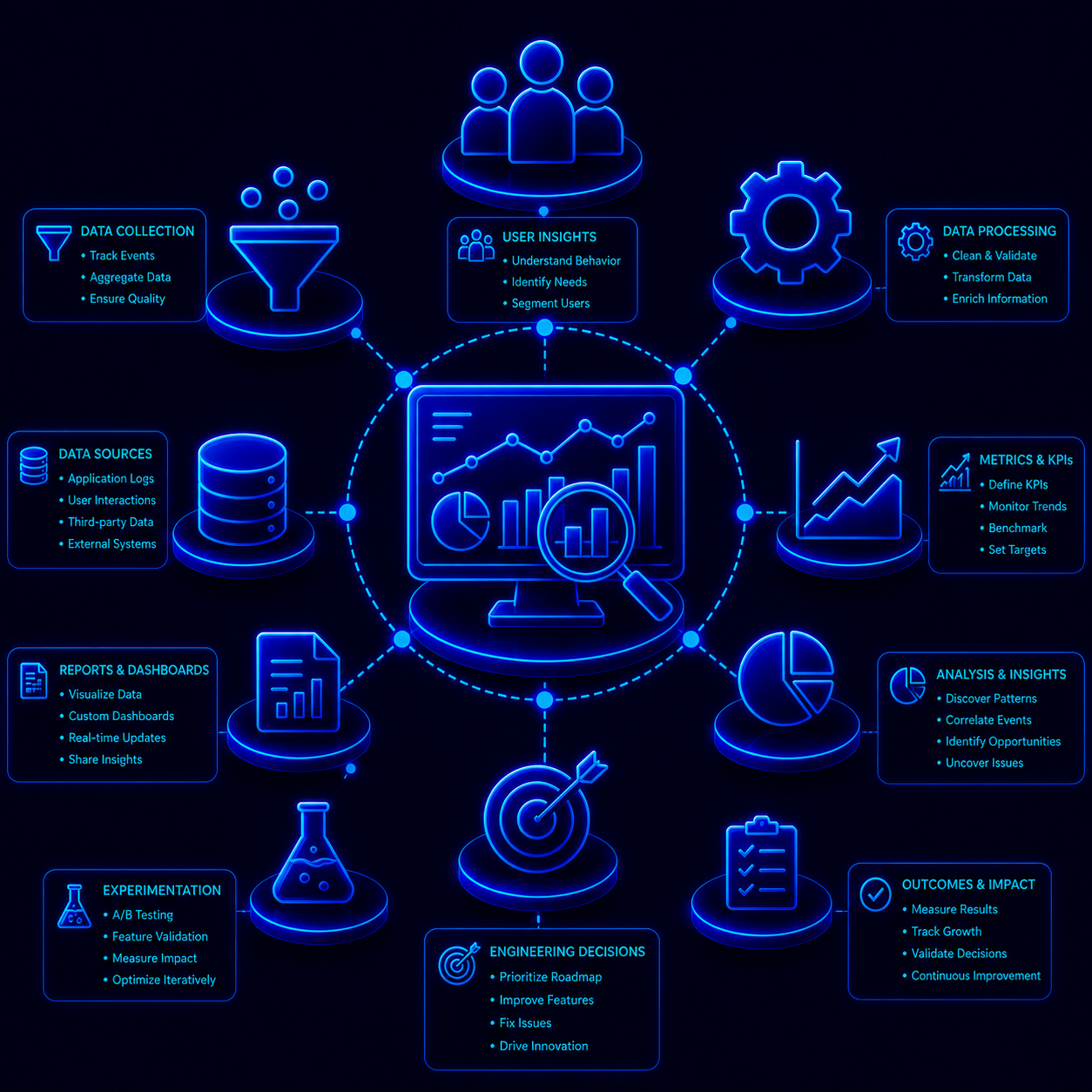
Product Analytics For Engineering Decisions
Modern engineering teams are expected to deliver features that not only function correctly but also create measurable business value. Product analytics provides valuable insights into how users interact with applications, helping teams understand behavior patterns, identify opportunities for improvement, and make informed technical decisions. By leveraging data effectively, organizations can build products that better align with user needs and business objectives.
Why Product Analytics Matters for Engineering Teams
Product analytics helps engineering teams understand how users interact with applications and digital platforms.
By analyzing real-world usage data, developers can identify which features provide value and which areas require improvement.
Analytics enables teams to move beyond assumptions and make decisions based on measurable user behavior.
Performance data also helps engineers prioritize optimizations that have the greatest impact on user experience.
Organizations that embrace analytics-driven development create products that are more effective, reliable, and user-focused.
Key Metrics That Guide Engineering Decisions
Engineering teams rely on various metrics to evaluate product performance and user engagement.
Feature adoption rates reveal how frequently users interact with newly released functionality.
Performance indicators such as response times, load speeds, and error rates help identify technical issues.
Retention and engagement metrics provide insights into customer satisfaction and long-term product value.
Monitoring these metrics enables teams to focus on improvements that deliver meaningful business and user outcomes.
Building a Data-Driven Engineering Culture
Successful product analytics requires a culture that values measurement, experimentation, and continuous learning.
Engineering teams should regularly review analytics dashboards, user feedback, and performance reports to guide decision-making.
Analytics tools help teams validate ideas, measure feature success, and assess the impact of product changes.
Cross-functional collaboration between engineering, product, marketing, and business teams ensures insights are used effectively.
Organizations that integrate analytics into their development processes can innovate faster, reduce risks, and build products that consistently meet customer expectations.
Case in Point
- Make data-driven engineering decisions
- Understand real user behavior patterns
- Identify performance bottlenecks quickly
- Improve feature adoption and engagement
- Reduce development guesswork
- Optimize product performance continuously
- Support business and product goals
- Enhance customer satisfaction through insights




0%