
- Services
Company Services
- Mobile
AppDevelopment - Web
Development - Ecommerce
Solutions - AI,
ML&Automation - Cloud
Technologies - Blockchain
Development - Salesforce
Solutions - Game
Development
Don't Hesitate to Collaborate with Us
Contact usAlways Here to Support You
Let's Talk Let's Talk







- Mobile
Working Hours : Monday - Friday, 09.30am - 09.30pm

Posted Date
May 8, 2025
DevSecOps In Product Engineering
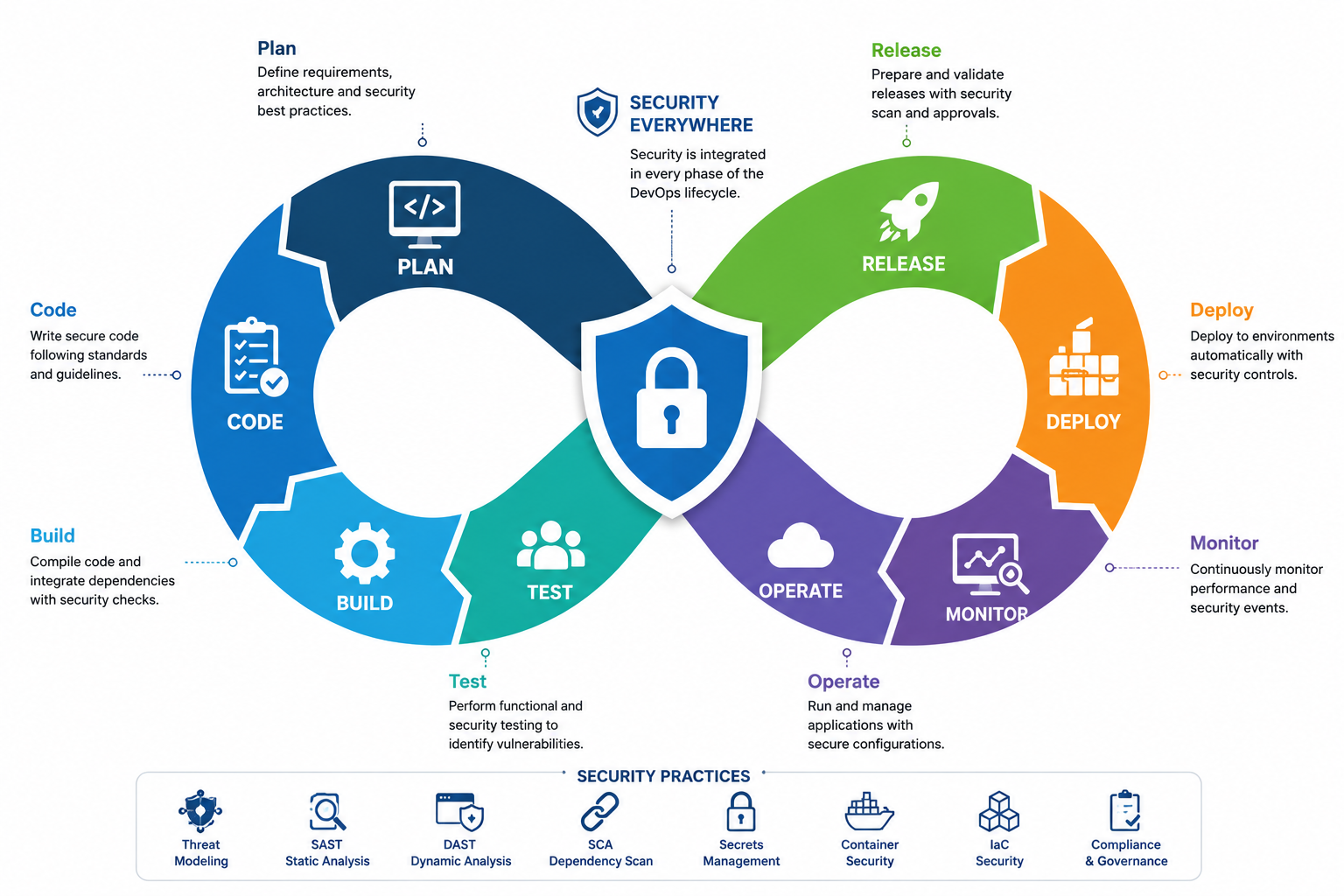
As digital products become more complex and cyber threats continue to evolve, security can no longer be treated as a final checkpoint. DevSecOps integrates security into every phase of the software development lifecycle, ensuring that applications remain secure without slowing down innovation. By combining development, security, and operations, organizations can deliver high-quality software faster while minimizing risks and maintaining compliance.
What Is DevSecOps?
DevSecOps is a software development approach that integrates security practices into the entire development and deployment lifecycle.
Unlike traditional models where security is addressed after development, DevSecOps makes security a shared responsibility across teams.
The methodology combines development, security, and operations to create secure, scalable, and efficient delivery pipelines.
Automation plays a critical role in identifying vulnerabilities, enforcing policies, and maintaining compliance throughout the process.
Organizations adopting DevSecOps can proactively manage security risks while maintaining development speed.
Core Principles of DevSecOps
A key principle of DevSecOps is shifting security left, meaning security considerations are introduced early in the development lifecycle.
Automated security testing helps identify vulnerabilities before applications reach production environments.
Continuous integration and continuous deployment pipelines include security checks, code scanning, and dependency analysis.
Infrastructure as Code practices improve consistency, transparency, and security management across environments.
Collaboration between developers, security professionals, and operations teams ensures a stronger and more resilient security culture.
Benefits of DevSecOps in Product Engineering
DevSecOps helps organizations reduce security risks while accelerating software delivery and innovation.
Early vulnerability detection significantly lowers the cost and effort required to fix security issues.
Continuous monitoring and automated threat detection improve visibility across systems and applications.
Compliance requirements become easier to manage through standardized processes, audit trails, and automated controls.
By integrating security into everyday development activities, organizations can build trustworthy digital products that deliver both performance and protection for users and businesses alike.
Case in Point
- Integrate security throughout development
- Identify vulnerabilities earlier in the lifecycle
- Improve software quality and reliability
- Accelerate secure product delivery
- Automate security testing and monitoring
- Reduce remediation costs and risks
- Strengthen regulatory compliance efforts
- Promote collaboration across teams




0%