
- Services
Company Services
- Mobile
AppDevelopment - Web
Development - Ecommerce
Solutions - AI,
ML&Automation - Cloud
Technologies - Blockchain
Development - Salesforce
Solutions - Game
Development
Don't Hesitate to Collaborate with Us
Contact usAlways Here to Support You
Let's Talk Let's Talk







- Mobile
Working Hours : Monday - Friday, 09.30am - 09.30pm

Posted Date
January 27, 2026
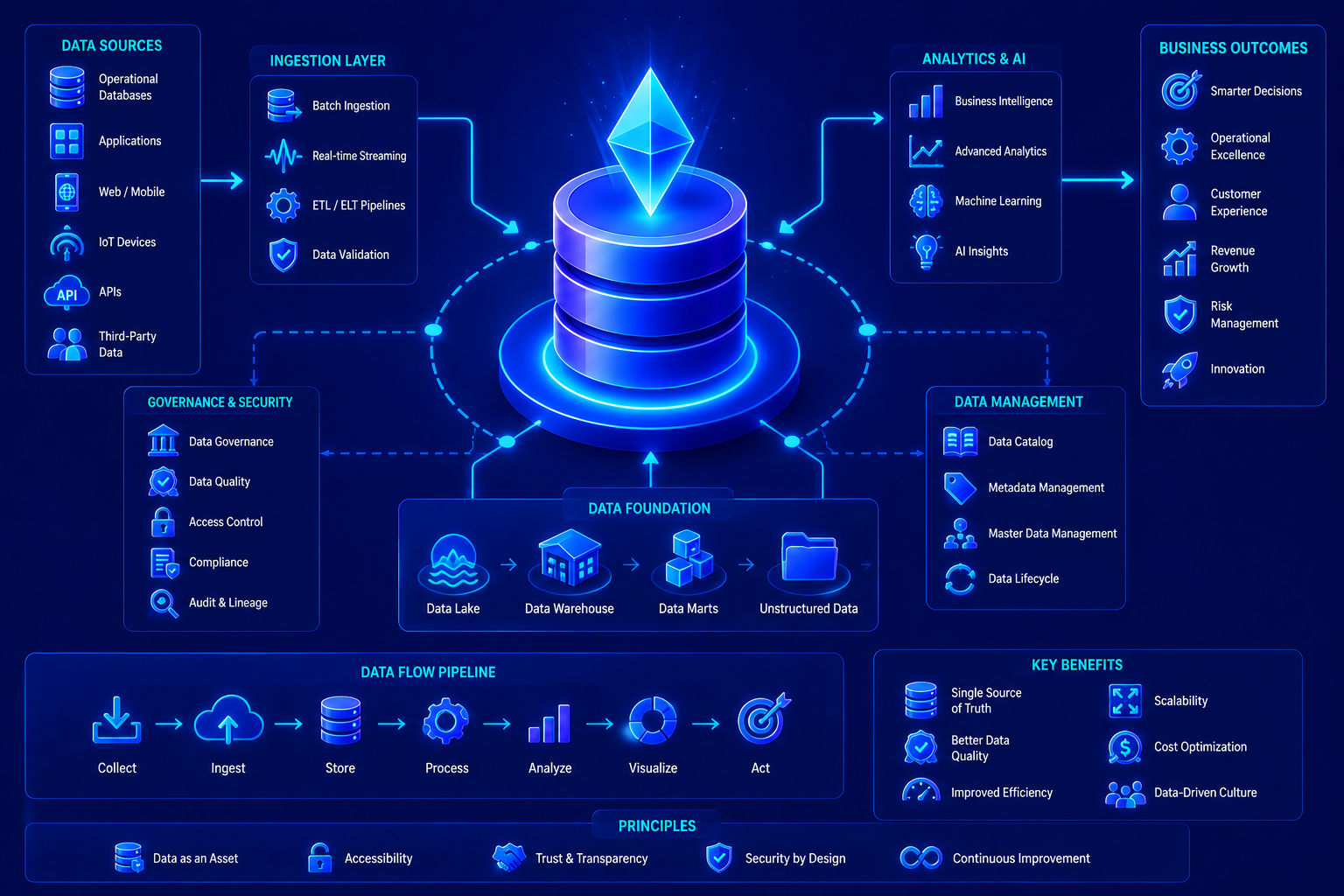
Data-First Approach To Modern Business
In today's digital economy, data has become one of the most valuable business assets. A data-first approach places data at the center of decision-making, operations, and innovation strategies. By transforming raw information into actionable insights, organizations can improve efficiency, predict trends, enhance customer experiences, and drive sustainable business growth. Companies that embrace data-driven cultures are better positioned to adapt, compete, and succeed in rapidly changing markets.
What a Data-First Business Really Means
A data-first organization uses information as a strategic asset rather than treating it as a byproduct of operations.
Business decisions are guided by evidence, analytics, and measurable outcomes instead of assumptions or intuition alone.
Data-first companies establish processes that ensure information is accessible, accurate, and actionable across departments.
This approach enables organizations to identify opportunities, mitigate risks, and improve overall business performance.
By embedding data into everyday workflows, businesses can make faster and more informed decisions.
Core Pillars of a Data-First Strategy
Strong data architecture ensures information is collected, stored, and managed efficiently across the organization.
Data governance frameworks help maintain quality, security, compliance, and trust in business data.
Analytics and business intelligence tools provide real-time visibility into performance, customer behavior, and market trends.
Self-service reporting empowers teams to access insights independently and make data-driven decisions quickly.
Organizations that invest in data foundations create scalable systems that support growth and innovation.
Business Benefits of Data-Driven Decision Making
Data-driven organizations can improve forecasting accuracy and identify market opportunities more effectively.
Advanced analytics helps optimize operations, reduce inefficiencies, and improve resource allocation.
Customer insights enable businesses to deliver personalized experiences and increase customer satisfaction.
Predictive analytics supports proactive decision-making by identifying potential challenges before they occur.
By adopting a data-first mindset, businesses can improve agility, enhance competitiveness, and create a foundation for sustainable digital transformation and long-term success.
Case in Point
- Improve data-driven decision making
- Enhance operational efficiency and productivity
- 35% faster business insights generation
- 30% improvement in strategic planning accuracy
- Enable real-time analytics and reporting
- Strengthen business forecasting capabilities
- Support innovation through actionable insights
- Accelerate digital transformation initiatives




0%