
- Services
Company Services
- Mobile
AppDevelopment - Web
Development - Ecommerce
Solutions - AI,
ML&Automation - Cloud
Technologies - Blockchain
Development - Salesforce
Solutions - Game
Development
Don't Hesitate to Collaborate with Us
Contact usAlways Here to Support You
Let's Talk Let's Talk







- Mobile
Working Hours : Monday - Friday, 09.30am - 09.30pm

Posted Date
March 5, 2025
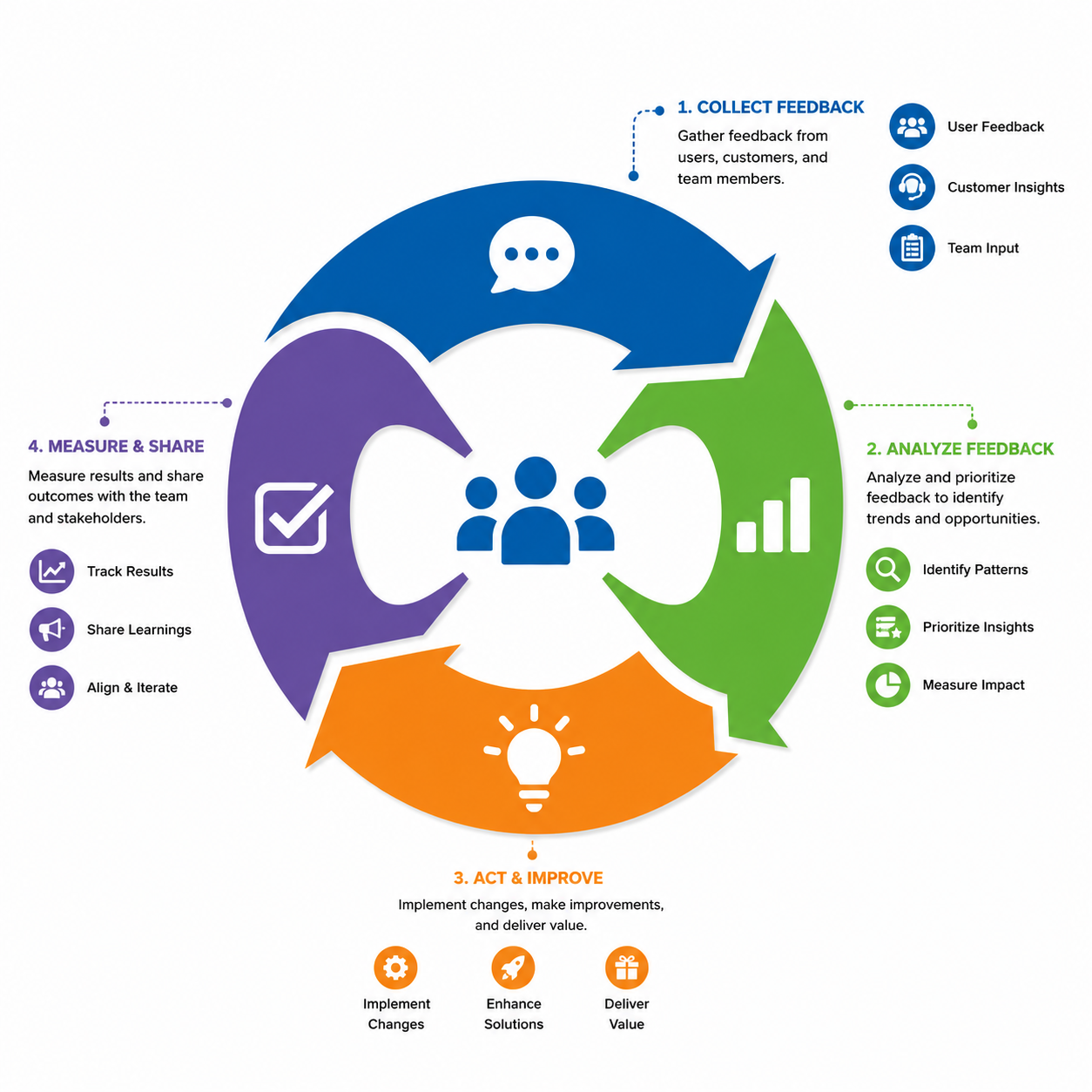
Continuous Feedback Loops In Product Teams
Successful products are built through continuous learning, adaptation, and improvement. Continuous feedback loops enable product teams to gather insights from users, stakeholders, and system data, transforming valuable feedback into actionable improvements. By integrating feedback throughout the product lifecycle, organizations can make informed decisions, reduce risks, and deliver products that consistently meet evolving customer expectations.
What Are Continuous Feedback Loops?
Continuous feedback loops are structured processes for collecting, analyzing, and acting on feedback throughout the product development lifecycle.
They help teams understand user behavior, identify challenges, and validate product decisions using real-world insights.
Feedback can come from customers, stakeholders, analytics platforms, support teams, and product performance metrics.
Organizations that implement continuous feedback loops can adapt more quickly to changing market demands and customer expectations.
These practices encourage ongoing improvement rather than relying on occasional reviews or assumptions.
Key Sources of Product Feedback
User feedback remains one of the most valuable sources of information for improving products and services.
Customer surveys, usability testing sessions, interviews, and support requests provide direct insights into user needs and challenges.
Behavioral analytics tools help teams understand how users interact with products, revealing opportunities for optimization.
Internal teams such as sales, customer support, and marketing can also provide valuable perspectives based on customer interactions.
Combining multiple feedback sources creates a comprehensive understanding of product performance and user expectations.
Building a Feedback-Driven Product Culture
Effective feedback loops require more than tools and processes; they depend on a culture of continuous learning and improvement.
Product teams should regularly review feedback, discuss insights, and prioritize actions that deliver meaningful value to users.
Integrating feedback into planning, development, testing, and post-launch activities ensures improvements happen consistently.
Modern analytics, survey platforms, and collaboration tools make it easier to collect and act on feedback in real time.
Organizations that embrace feedback-driven decision-making create more innovative products, improve customer satisfaction, and achieve sustainable growth.
Case in Point
- Improve product decisions with real user insights
- Identify issues before they impact users
- Increase customer satisfaction and retention
- Accelerate product improvement cycles
- Enhance team collaboration and alignment
- Reduce development risks and assumptions
- Support data-driven product strategies
- Create products that better match user needs




0%