
- Services
Company Services
- Mobile
AppDevelopment - Web
Development - Ecommerce
Solutions - AI,
ML&Automation - Cloud
Technologies - Blockchain
Development - Salesforce
Solutions - Game
Development
Don't Hesitate to Collaborate with Us
Contact usAlways Here to Support You
Let's Talk Let's Talk






- Mobile
Working Hours : Monday - Friday, 09.30am - 09.30pm

Posted Date
September 6, 2025
Collaboration Tools For Remote Engineering
Remote engineering teams have transformed the way software products are built, enabling organizations to access global talent and operate efficiently across time zones. However, successful remote collaboration requires more than skilled developers—it depends on the right tools, processes, and communication strategies. Modern collaboration platforms help engineering teams stay connected, manage projects effectively, and maintain productivity regardless of location.
Why Collaboration Tools Matter in Remote Engineering
Remote engineering teams rely heavily on digital communication and collaboration platforms to stay connected and productive.
Without effective tools, teams may experience communication gaps, reduced visibility, and delays in project execution.
Collaboration platforms help engineers coordinate tasks, share knowledge, and maintain alignment across distributed environments.
They provide centralized access to information, reducing confusion and improving workflow efficiency.
Organizations that invest in effective collaboration solutions can improve productivity, teamwork, and project outcomes.
Essential Collaboration Tools for Engineering Teams
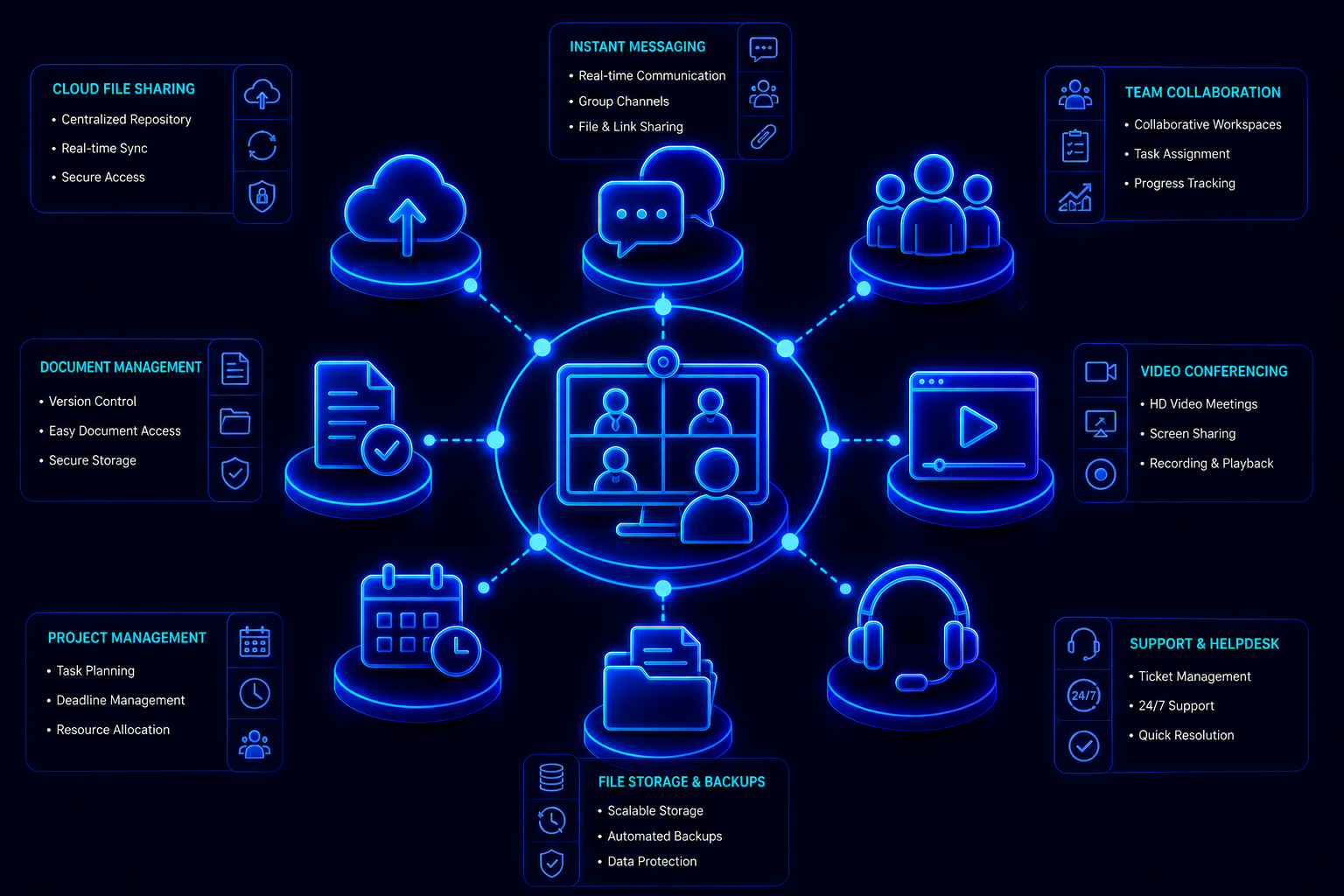
Communication platforms such as Slack, Microsoft Teams, and Zoom enable real-time discussions, meetings, and team coordination.
Version control systems like GitHub, GitLab, and Bitbucket help developers collaborate on code while maintaining project integrity.
Project management tools such as Jira, Trello, and ClickUp provide visibility into tasks, priorities, and development progress.
Documentation platforms including Confluence, Notion, and Google Docs support knowledge sharing and centralized information management.
Using integrated tool ecosystems helps teams streamline workflows and improve overall collaboration effectiveness.
Best Practices for Remote Collaboration Success
The effectiveness of collaboration tools depends on how teams use them within established processes and workflows.
Organizations should define clear communication guidelines, response expectations, and documentation standards.
Regular team meetings, status updates, and feedback sessions help maintain alignment and transparency.
Automation and integrations can reduce manual work while improving workflow efficiency and project visibility.
By combining the right tools with strong collaboration practices, remote engineering teams can deliver high-quality software, strengthen teamwork, and achieve long-term success in distributed development environments.
Case in Point
- Improve communication across remote teams
- Enhance real-time collaboration and coordination
- Increase project visibility and transparency
- Support efficient knowledge sharing
- Reduce communication delays and bottlenecks
- Strengthen team productivity and engagement
- Enable seamless remote project management
- Improve software delivery outcomes




0%