
- Services
Company Services
- Mobile
AppDevelopment - Web
Development - Ecommerce
Solutions - AI,
ML&Automation - Cloud
Technologies - Blockchain
Development - Salesforce
Solutions - Game
Development
Don't Hesitate to Collaborate with Us
Contact usAlways Here to Support You
Let's Talk Let's Talk







- Mobile
Working Hours : Monday - Friday, 09.30am - 09.30pm

Posted Date
February 10, 2025
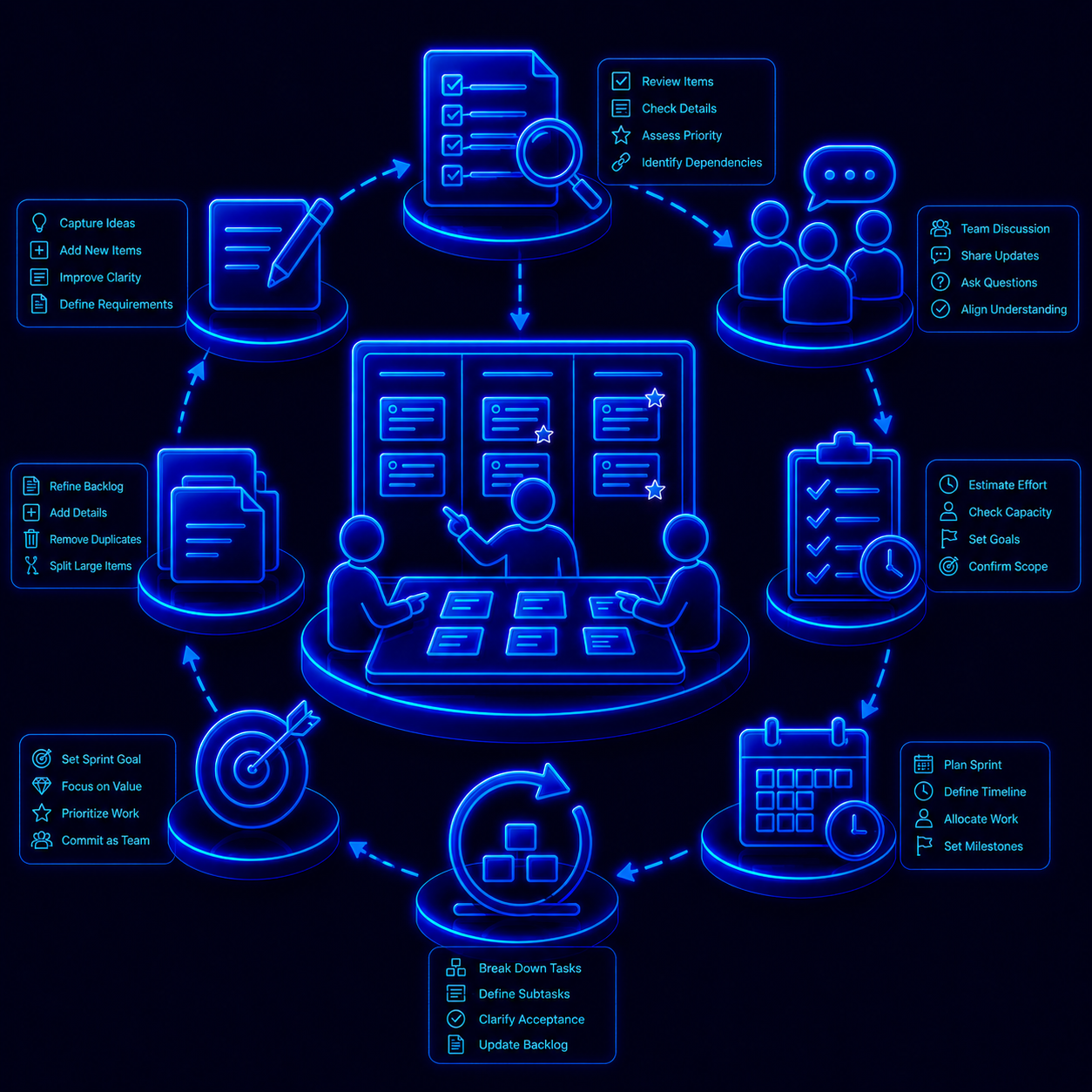
Backlog Grooming And Sprint Planning
Successful Agile development depends on clear priorities, well-defined requirements, and effective team collaboration. Backlog grooming and sprint planning are essential practices that help development teams stay organized, focus on high-value work, and deliver features efficiently. By maintaining a healthy backlog and planning realistic sprints, organizations can improve productivity, reduce uncertainty, and accelerate product delivery.
What Is Backlog Grooming?
Backlog grooming, also known as backlog refinement, is the ongoing process of reviewing, organizing, and prioritizing items in the product backlog.
Teams evaluate user stories, clarify requirements, estimate effort, and ensure tasks are ready for future development cycles.
Regular grooming sessions help remove outdated items, identify dependencies, and break large features into manageable tasks.
A well-maintained backlog ensures that development teams always have a clear understanding of upcoming priorities.
Effective backlog grooming reduces confusion and prepares teams for successful sprint execution.
Understanding Sprint Planning
Sprint planning is an Agile ceremony where teams determine the work that will be completed during an upcoming sprint.
The team reviews prioritized backlog items and selects tasks based on available capacity, business priorities, and project goals.
Developers, product owners, and stakeholders collaborate to establish clear objectives and realistic sprint commitments.
Accurate planning helps teams maintain focus, improve productivity, and avoid overcommitting resources.
A well-planned sprint creates transparency and alignment across the entire project team.
How Backlog Grooming and Sprint Planning Work Together
Backlog grooming and sprint planning are closely connected processes that support successful Agile delivery.
Grooming ensures that backlog items are clear, prioritized, and ready before sprint planning begins.
When user stories are properly refined, sprint planning becomes faster, more efficient, and more accurate.
Teams spend less time clarifying requirements and more time delivering valuable product features.
Organizations that consistently practice both backlog grooming and sprint planning achieve better project outcomes, stronger team alignment, and more predictable delivery schedules.
Case in Point
- Improve sprint predictability and planning
- Prioritize high-value development tasks
- Reduce development bottlenecks and delays
- Enhance collaboration across teams
- Increase estimation accuracy
- Improve product delivery consistency
- Maintain a healthy and organized backlog
- Support continuous Agile improvement




0%