
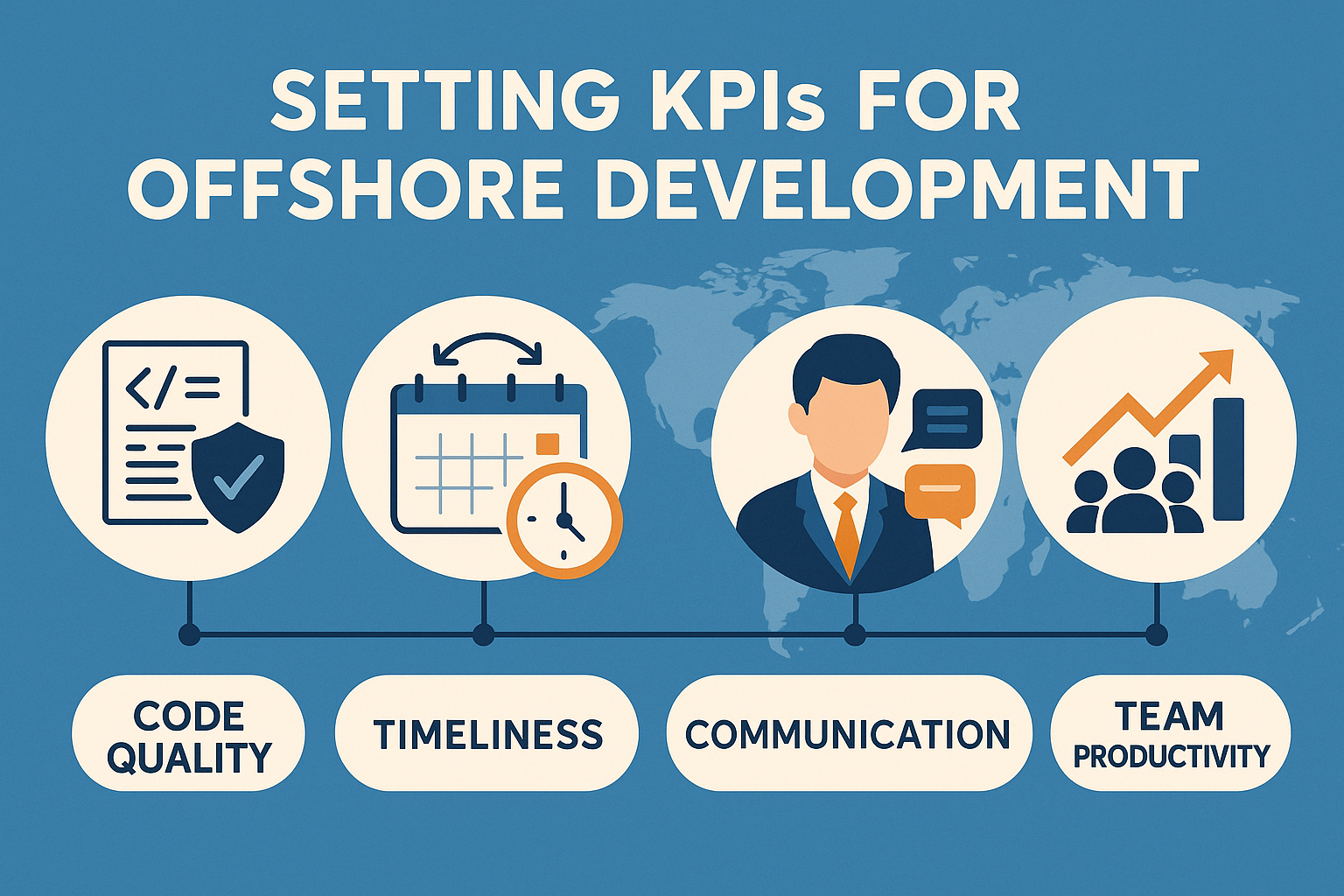
What gets measured gets improved—but only if you’re measuring what truly matters.
Why KPIs Matter in Offshore Development
Offshore teams can feel disconnected from your core product goals if expectations are vague or success metrics are unclear. KPIs (Key Performance Indicators) aren’t just about performance tracking—they’re your bridge between strategy and execution. The right KPIs can align teams across continents, reduce miscommunication, and create a culture of ownership and continuous improvement.
But poorly chosen KPIs can do more harm than good. They might encourage box-ticking over innovation or speed over quality. That’s why crafting meaningful, context-aware KPIs is critical to a healthy offshore setup.
Characteristics of Effective KPIs
Good KPIs for offshore teams should be:
Aligned with business and product objectives—not just engineering goals.
Balanced to track both delivery (output) and impact (outcomes).
Transparent so everyone, onshore and offshore, knows what success looks like.
Actionable—data should drive decisions, not just dashboards.
KPIs should serve as a feedback loop, helping teams course-correct early and often.
Sample KPI Categories for Offshore Teams
1. Delivery Metrics
Sprint velocity (story points delivered per sprint)
Sprint predictability (% of committed work completed)
Release frequency
2. Quality Metrics
Bug escape rate (bugs found post-release)
Code review rework rate
Automated test coverage %
3. Collaboration Metrics
PR response time
Participation in planning and retrospectives
Communication clarity and consistency
4. Business Impact Metrics
Feature adoption rate
Time-to-market for major features
Alignment with roadmap priorities
5. Team Health Metrics
Attrition rate
Onboarding ramp-up time
Developer satisfaction and engagement scores
Common Pitfalls to Avoid
Over-quantification: Not everything that matters can be Don’t reduce performance to just numbers.
Vanity Metrics: Metrics like “number of commits” or “lines of code” sound impressive but reveal little about value.
One-size-fits-all KPIs: A team handling backend APIs needs different metrics than one working on UX.
Instead, co-create KPIs with your offshore leads. When teams help define how they’re measured, they feel more accountable and empowered.
Conclusion
KPIs aren’t a control tool—they’re a communication tool. When done right, they shift the offshore conversation from ―what did you do?‖ to ―how are we growing together?‖ Use them not just to measure progress, but to strengthen trust, highlight what’s working, and create shared ownership across geographies.


